Ballooning portion sizes are considered a major player in the startling rise in obesity rates in recent decades, but current research points to evidence that we can turn this around.
A study in the April edition of the American Journal of Clinical Nutrition showed that exposure to smaller portions can recalibrate people's perception of how much is enough. In the first of the experiments, volunteers randomly ate either larger (440 calorie) or smaller (220 calorie) portions of the same quiche-and-salad meal. In the second experiment, a day later, volunteers could eat as much of that same food as they pleased. A week later, they were asked about their portion size preferences.
The scientists found that eating a smaller portion of food during the first experiment led to people consuming less of the food the next day. They also showed a tendency to feel satisfied with smaller portions a week later. The findings suggest that reducing portion sizes for packages and restaurant food could lead us to consider these new sizes "normal" and, in turn, help put the brakes on excess consumption.
Do you find that your portion sizes increase over the winter in response to some larger holiday dinners?
Saturday, January 5, 2019

Wednesday, October 17, 2018
Free DEXA Scan!
I had a DEXA scan done this past Saturday at the UCSD Bone School. Dual-Energy X-ray Absoptiometry is the gold standard to measure body composition (including body fat) and bone mineral density. You can learn more about DEXA here: EPARC, UC San Diego - Dual-energy X-ray Absorptiometry https://www.youtube.com/watch?v=UXN9pM8jtTw
I'm looking forward to seeing my results and recommend you to get a scan if you're interested in finding out more about your bone health and body composition. Four different scans were performed: body composition, hip, lumbar, and forearm. The appointment is free through the DEXA school, as long as you have a letter of consent from your primary care physician. I was able to email the form to my doctor and pick it up from her receptionist. The appointments are only on the weekends and may take up to 90 minutes. You would receive your results 1-2 weeks after the scan. Call 858-822-7624 or email ucsdboneschool@gmail.com to schedule the free DEXA through the school. Please make sure to be there for this appointments as the school relies on your participation to assure graduation to the attending students!
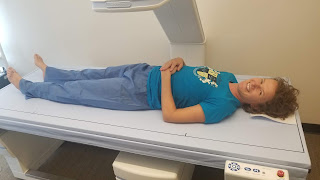
I'm looking forward to seeing my results and recommend you to get a scan if you're interested in finding out more about your bone health and body composition. Four different scans were performed: body composition, hip, lumbar, and forearm. The appointment is free through the DEXA school, as long as you have a letter of consent from your primary care physician. I was able to email the form to my doctor and pick it up from her receptionist. The appointments are only on the weekends and may take up to 90 minutes. You would receive your results 1-2 weeks after the scan. Call 858-822-7624 or email ucsdboneschool@gmail.com to schedule the free DEXA through the school. Please make sure to be there for this appointments as the school relies on your participation to assure graduation to the attending students!

Thursday, October 4, 2018
Olympic Lifting Workout
If you're looking for a more advanced barbell workout, give this a try:
5 sets of 5 reps:
Deadlift
High pull
Clean
Front Squat
Jerk
Back Squat
5 sets of 5 reps:
Deadlift
High pull
Clean
Front Squat
Jerk
Back Squat
Thursday, September 13, 2018
Sleep: The Only True "Fix-All" of Health and Performance
After my email 2 weeks ago summarising some of my favorite presentations at the Perform Better Functional Training Summit, a lot of you expressed interest in the Sleep presentation.
Brandon Marcello started the presentation by listing the order of operations to high performance:
1. Sleep
2. Nutrition
3. Movement
4. Performance
5. Skill
He then stressed the importance of sleep and how fatigue, resulting from inadequate sleep, has a direct and measurable impact on reaction time, recovery, overall performance, and career longevity. Not having enough sleep leads to increased risk of injury and reduced pain threshold, greater susceptibility to sickness, reduced physical and psychological performance, reduced motivation, learning ability and memory, increase in anxiety, irritability and mistakes, increase in body fat percentage, reverting to old habits, and poor judgement of distance, speed, and and/or time.
Sleep facilitates an optimal level of waking function through alertness and ability to maintain focus and attention, cognitive performance (learning, memory, and creativity), mood, energy and motivation, control, coordination, and impulsiveness.
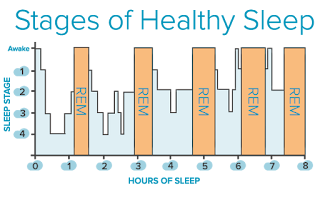 Having enough sleep every night allows us to reach deep sleep for a longer period of time. As you can see in the chart, we sleep much deeper after four hours of sleep than before. Having enough sleep improves motivation, recovery of muscle strength, sprint speeds, muscle glycogen, cortisol (stress) regulation, motor skill development, and memory consolidation.
Sleep Debt
Sleep Debt occurs when we don't have enough sleep. For example, if you need 8 hours and only slept 7 hours, you have 1 hour of sleep debt and need 9 hours of sleep the following night to "repay" that debt. Drowsiness after lunch is a red alert that you have sleep debt. You can also monitor your drowsiness after lunch to determine exactly how much sleep you need. You'll no longer feel drowsy if you have slept your needed hours of sleep a night.
Sleep Studies
A number of studies have shown increases in performance for students and athletes after increasing sleeping time. For example, after extending time in bed to 10hrs/night for several weeks, collegiate basketball players showed a 9% improvement in free throw shooting accuracy and a 9.2% improvement in 3 pt field goal shooting accuracy. Grade point averages improved 11% when cadets' sleep opportunity was expanded to from 6hr/night to 8hr/night. Another study showed that 24 year old healthy men who slept less than 5hrs/night for a week registered a 15% drop in testosterone. Yet another study found that there was an increase in your chances of catching a cold when you're not sleeping enough: When sleeping more than 7 hours, chances of catching a cold were 17.2%. When sleeping 5-6 hours, chances of catching a cold were 30%.
Sleep and the Brain
During sleep, the brain "bathes" itself in cerebrospinal fluid to get rid of waste products. The brain will also clean out toxic proteins, which can impair healthy aging of the brain, and cause brain-related diseases, such as Alzheimer's and other neurological disorders.
Sleep/Nutrition Interaction
Your sleep can influence what you eat and vice versa. Sleep deprivation alters the ability of the body to metabolize and store carbohydrates for recovery, as well as use them later. Individuals who are sleep deprived tend to crave carbohydrates.
Sleep Strategies
It is important to maintain the bedroom for sleep only. Be wary of "screen-time" an hour before going to bed, especially in the bedroom. Alertness is enhanced because the blight light emitted suppresses melatonin levels and also because the content presented is engaging and exciting. It helps to establish a bedtime routine. Here are some strategies: turn off all screens, take a hot shower, listen to relaxing music, stretch, lay out clothes for the next day, go to bed by 10:30pm, or read a relaxing book for 30-45 mins. A quiet and comfortable sleep environment is a dark room with temperature around 67F, unwanted sounds masked with a fan or other white-noise, and using ear plugs and sleep masks, if needed. Keep your biological clock in mind when you're planning your sleep:
 Sleep Supplementation
There are many products on the market to help us sleep. It is generally not recommended to use any of these regularly, but they can help with sleep when used sporadically. Calcium, magnesium and zinc is one such mixture. Calcium helps the brain use the amino acid tryptophan to manufacture the sleep-inducing substance melatonin. Melatonin can also be taken directly. However, since melatonin is a hormone, taking it regularly will down-regulate our own bodies' production of melatonin.
It seems the proof is there that sleep is an invaluable part of our health. I have been prioritizing my own sleep recently by modifying my work and exercise schedule to allow me enough time to wind down at the end of the day. Having enough sleep is difficult for me and something that I continue to put effort into. What sleep strategies have you found work for you?
Brandon Marcello started the presentation by listing the order of operations to high performance:
1. Sleep
2. Nutrition
3. Movement
4. Performance
5. Skill
He then stressed the importance of sleep and how fatigue, resulting from inadequate sleep, has a direct and measurable impact on reaction time, recovery, overall performance, and career longevity. Not having enough sleep leads to increased risk of injury and reduced pain threshold, greater susceptibility to sickness, reduced physical and psychological performance, reduced motivation, learning ability and memory, increase in anxiety, irritability and mistakes, increase in body fat percentage, reverting to old habits, and poor judgement of distance, speed, and and/or time.
Sleep facilitates an optimal level of waking function through alertness and ability to maintain focus and attention, cognitive performance (learning, memory, and creativity), mood, energy and motivation, control, coordination, and impulsiveness.

Sleep Debt
Sleep Debt occurs when we don't have enough sleep. For example, if you need 8 hours and only slept 7 hours, you have 1 hour of sleep debt and need 9 hours of sleep the following night to "repay" that debt. Drowsiness after lunch is a red alert that you have sleep debt. You can also monitor your drowsiness after lunch to determine exactly how much sleep you need. You'll no longer feel drowsy if you have slept your needed hours of sleep a night.
Sleep Studies
A number of studies have shown increases in performance for students and athletes after increasing sleeping time. For example, after extending time in bed to 10hrs/night for several weeks, collegiate basketball players showed a 9% improvement in free throw shooting accuracy and a 9.2% improvement in 3 pt field goal shooting accuracy. Grade point averages improved 11% when cadets' sleep opportunity was expanded to from 6hr/night to 8hr/night. Another study showed that 24 year old healthy men who slept less than 5hrs/night for a week registered a 15% drop in testosterone. Yet another study found that there was an increase in your chances of catching a cold when you're not sleeping enough: When sleeping more than 7 hours, chances of catching a cold were 17.2%. When sleeping 5-6 hours, chances of catching a cold were 30%.
Sleep and the Brain
During sleep, the brain "bathes" itself in cerebrospinal fluid to get rid of waste products. The brain will also clean out toxic proteins, which can impair healthy aging of the brain, and cause brain-related diseases, such as Alzheimer's and other neurological disorders.
Sleep/Nutrition Interaction
Your sleep can influence what you eat and vice versa. Sleep deprivation alters the ability of the body to metabolize and store carbohydrates for recovery, as well as use them later. Individuals who are sleep deprived tend to crave carbohydrates.
Sleep Strategies
It is important to maintain the bedroom for sleep only. Be wary of "screen-time" an hour before going to bed, especially in the bedroom. Alertness is enhanced because the blight light emitted suppresses melatonin levels and also because the content presented is engaging and exciting. It helps to establish a bedtime routine. Here are some strategies: turn off all screens, take a hot shower, listen to relaxing music, stretch, lay out clothes for the next day, go to bed by 10:30pm, or read a relaxing book for 30-45 mins. A quiet and comfortable sleep environment is a dark room with temperature around 67F, unwanted sounds masked with a fan or other white-noise, and using ear plugs and sleep masks, if needed. Keep your biological clock in mind when you're planning your sleep:

There are many products on the market to help us sleep. It is generally not recommended to use any of these regularly, but they can help with sleep when used sporadically. Calcium, magnesium and zinc is one such mixture. Calcium helps the brain use the amino acid tryptophan to manufacture the sleep-inducing substance melatonin. Melatonin can also be taken directly. However, since melatonin is a hormone, taking it regularly will down-regulate our own bodies' production of melatonin.
It seems the proof is there that sleep is an invaluable part of our health. I have been prioritizing my own sleep recently by modifying my work and exercise schedule to allow me enough time to wind down at the end of the day. Having enough sleep is difficult for me and something that I continue to put effort into. What sleep strategies have you found work for you?
Friday, August 31, 2018
Perform Better Functional Training Summit 2018
My first Functional Training Summit was in 2010. This year I decided to go back. The Summit is three days of lectures and hands-on opportunities in all aspects of training. This is a summary of some of the presentations I attended.
Odd Position Strength Training: Michol Dalcourt
Dalcourt presented on the difference between muscular strength training (developing muscle force in a single plane of motion: bench press) and movement strength training (variable loading positions during multi-directional movement: Turkish Get-Up). I use both types of training in my programming, but would like to increase my knowledge base of the movement strength training exercises.

Revamp Your Bootcamp: Marc Lebert
In this hands-on, I had an opportunity to use the Lebert Equalizer bars in many different ways. Some of you have already had a chance to try out some of the new moves.

Sleep: The only True "Fix-All" of Health and Perfomance: Brandon Marcello
Despite having a PhD in nutrition, Marcello insisted that sleep is the most important factor in health and wellness, followed by nutrition and movement. He went over the results of having vs not-having enough sleep, sleep debt and how to repay it, and sleep myths.
Unlocking Mobility: How to Create Flexibility that Lasts: Greg Rose
Greg Rose, a chiropractor, presented how to increase thoracic spine and hip mobility by combining pressure against a joint with deep breathing.
The Ketogenic Diet: Right or Wrong?: Robert Yang
The keto diet, as it's most often applied, has the following macronutrient breakdown: 65% fat, 10% carbohydrates, 25% protein. While studies have shown that this diet is safe for general health, Yang advised that body type, adrenal health, response to dairy, gender, and exercise activity need to be considered before recommending it.
Which of these topics are you most interested in? I plan to go into more detail in future posts.
Odd Position Strength Training: Michol Dalcourt
Dalcourt presented on the difference between muscular strength training (developing muscle force in a single plane of motion: bench press) and movement strength training (variable loading positions during multi-directional movement: Turkish Get-Up). I use both types of training in my programming, but would like to increase my knowledge base of the movement strength training exercises.

Revamp Your Bootcamp: Marc Lebert
In this hands-on, I had an opportunity to use the Lebert Equalizer bars in many different ways. Some of you have already had a chance to try out some of the new moves.

Sleep: The only True "Fix-All" of Health and Perfomance: Brandon Marcello
Despite having a PhD in nutrition, Marcello insisted that sleep is the most important factor in health and wellness, followed by nutrition and movement. He went over the results of having vs not-having enough sleep, sleep debt and how to repay it, and sleep myths.
Unlocking Mobility: How to Create Flexibility that Lasts: Greg Rose
Greg Rose, a chiropractor, presented how to increase thoracic spine and hip mobility by combining pressure against a joint with deep breathing.
The Ketogenic Diet: Right or Wrong?: Robert Yang
The keto diet, as it's most often applied, has the following macronutrient breakdown: 65% fat, 10% carbohydrates, 25% protein. While studies have shown that this diet is safe for general health, Yang advised that body type, adrenal health, response to dairy, gender, and exercise activity need to be considered before recommending it.
Which of these topics are you most interested in? I plan to go into more detail in future posts.
Wednesday, August 8, 2018
Taking a Break from Exercise?
It's officially August and high time for soaking up the best of what summer has to offer, including vacation, beach trips, and lazy summer days. The last thing many of us want to do when it's hot is work out, but an array of new research shows that reducing exercise due to circumstance or preference may have lasting negative effects on metabolism, insulin resistance, body composition, and much more.
Whether the effects last depends on your age, your level of activity before the exercise "break," and the length of time your break endures. One study recently published in the journal Diabetologia sought to find out what happens when active men and women suddenly stop their habitual daily movement. To assess, researchers found 45 healthy, active adults and took various measures of their health before starting the experiment, first after 14 days of drastically reduced activity and once more after 14 days of increasing their normal active routines. Body composition, X-rays, magnetic resonance spectroscopy (an imaging technology complementary to MRIs), and multi-organ insulin sensitivity tests were run at each 14-day juncture.
Before the study began, these people were walking more than their recommended 10,000 steps each day (though we know now that's variable in and of itself); during the restricted-movement phase, they took an average of 95 percent fewer steps and increased sedentary behavior by almost four hours daily. The bad news is that testing after the two-week sedentary phase revealed whole-body decreased insulin sensitivity; lower muscle mass; an increase in total body fat, liver fat, and "bad" LDL cholesterol; and lower cardiorespiratory levels of fitness across the board. The scientists who conducted the study called these "metabolic derangements"—yikes!
The good news is that after participants go back to their habitual levels of movement and activity, these metabolic derangements were reversed. Don't have the time to work out? One of the best and most underrated ways to squeeze in a "workout" is through the NEAT technique, which stands for non-exercise activity thermogenesis. Taking the stairs, opting for a walking meeting, standing desks, or parking a little farther from the entrance of the grocery store are all good examples of NEAT.
While we each need a different amount of exercise, and there are certainly times when your body could benefit from a few days off, a prolonged period without getting your normal amount of activity could have negative health effects, a reminder that consistency is key.
Full Article
Whether the effects last depends on your age, your level of activity before the exercise "break," and the length of time your break endures. One study recently published in the journal Diabetologia sought to find out what happens when active men and women suddenly stop their habitual daily movement. To assess, researchers found 45 healthy, active adults and took various measures of their health before starting the experiment, first after 14 days of drastically reduced activity and once more after 14 days of increasing their normal active routines. Body composition, X-rays, magnetic resonance spectroscopy (an imaging technology complementary to MRIs), and multi-organ insulin sensitivity tests were run at each 14-day juncture.
Before the study began, these people were walking more than their recommended 10,000 steps each day (though we know now that's variable in and of itself); during the restricted-movement phase, they took an average of 95 percent fewer steps and increased sedentary behavior by almost four hours daily. The bad news is that testing after the two-week sedentary phase revealed whole-body decreased insulin sensitivity; lower muscle mass; an increase in total body fat, liver fat, and "bad" LDL cholesterol; and lower cardiorespiratory levels of fitness across the board. The scientists who conducted the study called these "metabolic derangements"—yikes!
The good news is that after participants go back to their habitual levels of movement and activity, these metabolic derangements were reversed. Don't have the time to work out? One of the best and most underrated ways to squeeze in a "workout" is through the NEAT technique, which stands for non-exercise activity thermogenesis. Taking the stairs, opting for a walking meeting, standing desks, or parking a little farther from the entrance of the grocery store are all good examples of NEAT.
While we each need a different amount of exercise, and there are certainly times when your body could benefit from a few days off, a prolonged period without getting your normal amount of activity could have negative health effects, a reminder that consistency is key.
Full Article
Wednesday, July 25, 2018
Circadian Rhythms and the Right Times to Feed Ourselves
We expend much time and effort focusing on the quality and quantity of food consumed. There's no question that switching out processed foods for whole, organic foods is key to good nutrition. So is paying attention to how much one eats.
But we don't place enough emphasis on the frequency and circadian timing of meals. Recent research investigated the role that our evolutionary body clock has on when we should eat. For most of human history, our lifestyles have followed a natural light/dark rhythm with most of our activity and food consumption occurring during daylight and not much other than sleep during darkness.
Mouse Study
Two groups of mice were fed a poor-quality, high-fat diet (akin to the typical American diet). Both groups received the same number of calories. One group ate whenever they wanted in 24 hours, while the other ate only during an 8hr window in sync with a mouse's circadian rhythm. Results:
8hr feeding time: optimal body composition, motor coordination improved
24 hr feeding time: overweight, diabetic, hyperinsulinemia (high insulin levels in the blood), fatty liver disease, inflammation
A follow up study found that the time-restricted mice remained lean and healthy, even when their feeding time was increased to a 9-12 hour window and they were allowed "weekend cheats." Halfway through the study, the unrestrained eaters were switched over to a 9-12hr feeding window and they began to shed the extra weight they had gained via non-time-restricted feeding.
Human Advice
Eating by our natural body clock means that consumption happens when the body is more efficient at breaking down foods. The metabolic system evolved to make fuel and energy available at specific times of the day. Once daylight fades into nighttime and feeding ends, we enter a unique alternative metabolic phase. In the nonfeeding state, the body's process of regeneration and repair begins. Cells recycle their contents to promote optimal health and prevent disease. Researchers found that 12- 16 hours of non-feeding reduces excess body fat while lowering levels of insulin and blood sugar. He also found that it's healthful for the body to impose the mild cellular stress of 12-16 hours of non-feeding, as it strengthens cells' ability to adapt and cope with more severe stresses like disease and aging.
The easiest and most basic plan is to feed within a 12 hour window, ideally in sync with the light/dark cycle. Increasing the nonfeeding time to anywhere between 12 and 16 hours enhances the health benefits of the regenerative period.

Full Article
What are some of your experiences with time restricted eating (sometimes called intermittent fasting)?
But we don't place enough emphasis on the frequency and circadian timing of meals. Recent research investigated the role that our evolutionary body clock has on when we should eat. For most of human history, our lifestyles have followed a natural light/dark rhythm with most of our activity and food consumption occurring during daylight and not much other than sleep during darkness.
Mouse Study
Two groups of mice were fed a poor-quality, high-fat diet (akin to the typical American diet). Both groups received the same number of calories. One group ate whenever they wanted in 24 hours, while the other ate only during an 8hr window in sync with a mouse's circadian rhythm. Results:
8hr feeding time: optimal body composition, motor coordination improved
24 hr feeding time: overweight, diabetic, hyperinsulinemia (high insulin levels in the blood), fatty liver disease, inflammation
A follow up study found that the time-restricted mice remained lean and healthy, even when their feeding time was increased to a 9-12 hour window and they were allowed "weekend cheats." Halfway through the study, the unrestrained eaters were switched over to a 9-12hr feeding window and they began to shed the extra weight they had gained via non-time-restricted feeding.
Human Advice
Eating by our natural body clock means that consumption happens when the body is more efficient at breaking down foods. The metabolic system evolved to make fuel and energy available at specific times of the day. Once daylight fades into nighttime and feeding ends, we enter a unique alternative metabolic phase. In the nonfeeding state, the body's process of regeneration and repair begins. Cells recycle their contents to promote optimal health and prevent disease. Researchers found that 12- 16 hours of non-feeding reduces excess body fat while lowering levels of insulin and blood sugar. He also found that it's healthful for the body to impose the mild cellular stress of 12-16 hours of non-feeding, as it strengthens cells' ability to adapt and cope with more severe stresses like disease and aging.
The easiest and most basic plan is to feed within a 12 hour window, ideally in sync with the light/dark cycle. Increasing the nonfeeding time to anywhere between 12 and 16 hours enhances the health benefits of the regenerative period.

Full Article
What are some of your experiences with time restricted eating (sometimes called intermittent fasting)?
Subscribe to:
Posts (Atom)


 Posts
Posts

