It's officially August and high time for soaking up the best of what summer has to offer, including vacation, beach trips, and lazy summer days. The last thing many of us want to do when it's hot is work out, but an array of new research shows that reducing exercise due to circumstance or preference may have lasting negative effects on metabolism, insulin resistance, body composition, and much more.
Whether the effects last depends on your age, your level of activity before the exercise "break," and the length of time your break endures. One study recently published in the journal Diabetologia sought to find out what happens when active men and women suddenly stop their habitual daily movement. To assess, researchers found 45 healthy, active adults and took various measures of their health before starting the experiment, first after 14 days of drastically reduced activity and once more after 14 days of increasing their normal active routines. Body composition, X-rays, magnetic resonance spectroscopy (an imaging technology complementary to MRIs), and multi-organ insulin sensitivity tests were run at each 14-day juncture.
Before the study began, these people were walking more than their recommended 10,000 steps each day (though we know now that's variable in and of itself); during the restricted-movement phase, they took an average of 95 percent fewer steps and increased sedentary behavior by almost four hours daily. The bad news is that testing after the two-week sedentary phase revealed whole-body decreased insulin sensitivity; lower muscle mass; an increase in total body fat, liver fat, and "bad" LDL cholesterol; and lower cardiorespiratory levels of fitness across the board. The scientists who conducted the study called these "metabolic derangements"—yikes!
The good news is that after participants go back to their habitual levels of movement and activity, these metabolic derangements were reversed. Don't have the time to work out? One of the best and most underrated ways to squeeze in a "workout" is through the NEAT technique, which stands for non-exercise activity thermogenesis. Taking the stairs, opting for a walking meeting, standing desks, or parking a little farther from the entrance of the grocery store are all good examples of NEAT.
While we each need a different amount of exercise, and there are certainly times when your body could benefit from a few days off, a prolonged period without getting your normal amount of activity could have negative health effects, a reminder that consistency is key.
Full Article
Wednesday, August 8, 2018

Wednesday, July 25, 2018
Circadian Rhythms and the Right Times to Feed Ourselves
We expend much time and effort focusing on the quality and quantity of food consumed. There's no question that switching out processed foods for whole, organic foods is key to good nutrition. So is paying attention to how much one eats.
But we don't place enough emphasis on the frequency and circadian timing of meals. Recent research investigated the role that our evolutionary body clock has on when we should eat. For most of human history, our lifestyles have followed a natural light/dark rhythm with most of our activity and food consumption occurring during daylight and not much other than sleep during darkness.
Mouse Study
Two groups of mice were fed a poor-quality, high-fat diet (akin to the typical American diet). Both groups received the same number of calories. One group ate whenever they wanted in 24 hours, while the other ate only during an 8hr window in sync with a mouse's circadian rhythm. Results:
8hr feeding time: optimal body composition, motor coordination improved
24 hr feeding time: overweight, diabetic, hyperinsulinemia (high insulin levels in the blood), fatty liver disease, inflammation
A follow up study found that the time-restricted mice remained lean and healthy, even when their feeding time was increased to a 9-12 hour window and they were allowed "weekend cheats." Halfway through the study, the unrestrained eaters were switched over to a 9-12hr feeding window and they began to shed the extra weight they had gained via non-time-restricted feeding.
Human Advice
Eating by our natural body clock means that consumption happens when the body is more efficient at breaking down foods. The metabolic system evolved to make fuel and energy available at specific times of the day. Once daylight fades into nighttime and feeding ends, we enter a unique alternative metabolic phase. In the nonfeeding state, the body's process of regeneration and repair begins. Cells recycle their contents to promote optimal health and prevent disease. Researchers found that 12- 16 hours of non-feeding reduces excess body fat while lowering levels of insulin and blood sugar. He also found that it's healthful for the body to impose the mild cellular stress of 12-16 hours of non-feeding, as it strengthens cells' ability to adapt and cope with more severe stresses like disease and aging.
The easiest and most basic plan is to feed within a 12 hour window, ideally in sync with the light/dark cycle. Increasing the nonfeeding time to anywhere between 12 and 16 hours enhances the health benefits of the regenerative period.

Full Article
What are some of your experiences with time restricted eating (sometimes called intermittent fasting)?
But we don't place enough emphasis on the frequency and circadian timing of meals. Recent research investigated the role that our evolutionary body clock has on when we should eat. For most of human history, our lifestyles have followed a natural light/dark rhythm with most of our activity and food consumption occurring during daylight and not much other than sleep during darkness.
Mouse Study
Two groups of mice were fed a poor-quality, high-fat diet (akin to the typical American diet). Both groups received the same number of calories. One group ate whenever they wanted in 24 hours, while the other ate only during an 8hr window in sync with a mouse's circadian rhythm. Results:
8hr feeding time: optimal body composition, motor coordination improved
24 hr feeding time: overweight, diabetic, hyperinsulinemia (high insulin levels in the blood), fatty liver disease, inflammation
A follow up study found that the time-restricted mice remained lean and healthy, even when their feeding time was increased to a 9-12 hour window and they were allowed "weekend cheats." Halfway through the study, the unrestrained eaters were switched over to a 9-12hr feeding window and they began to shed the extra weight they had gained via non-time-restricted feeding.
Human Advice
Eating by our natural body clock means that consumption happens when the body is more efficient at breaking down foods. The metabolic system evolved to make fuel and energy available at specific times of the day. Once daylight fades into nighttime and feeding ends, we enter a unique alternative metabolic phase. In the nonfeeding state, the body's process of regeneration and repair begins. Cells recycle their contents to promote optimal health and prevent disease. Researchers found that 12- 16 hours of non-feeding reduces excess body fat while lowering levels of insulin and blood sugar. He also found that it's healthful for the body to impose the mild cellular stress of 12-16 hours of non-feeding, as it strengthens cells' ability to adapt and cope with more severe stresses like disease and aging.
The easiest and most basic plan is to feed within a 12 hour window, ideally in sync with the light/dark cycle. Increasing the nonfeeding time to anywhere between 12 and 16 hours enhances the health benefits of the regenerative period.

Full Article
What are some of your experiences with time restricted eating (sometimes called intermittent fasting)?
Thursday, July 5, 2018
IDEA Expo 2018
The IDEA (International Dance Exercise Association) had its World Convention this past weekend in San Diego. I attended the Expo, which showcases new products in fitness equipment, supplements, and programs. There was a lot of equipment that used instability to focus on balance.
 For example, this is a bar with suspended balls on either side. The balls are filled with water, so that as Luis does overhead presses or squats, the exercise becomes much more difficult and awkward if he is off center. There was another piece of equipment with steel balls inside a bar. If you tilt to one side, the bar becomes much more weighted on one side than the other.
 Resistance bands were also popular in a lot of the exercise equipment. I'm using a piece of equipment called Frog Fitness. It's basically two axles with wheels on either side and resistance bands connecting the two axles. The demo guy had me do a leg press movement, a shoulder press movement, and a pike-like movement, all while prone and suspended over the "Frog."
In the supplement area, protein was the most popular. There was protein fizzy water, protein chips, egg white chips, protein cookies, protein coffee, protein desserts, and of course protein bars.
The Expo was a good opportunity to see the latest and greatest in the fitness industry. Expo passes are usually free, so I encourage you to check it out if you're interested next year.


In the supplement area, protein was the most popular. There was protein fizzy water, protein chips, egg white chips, protein cookies, protein coffee, protein desserts, and of course protein bars.
The Expo was a good opportunity to see the latest and greatest in the fitness industry. Expo passes are usually free, so I encourage you to check it out if you're interested next year.
Thursday, June 21, 2018
Weight Watchers Free Teen Program: Good or Bad?
As part of an effort to rebuild its brand as a health-and-wellness company rather than a diet brand (and to gain new loyal customers), Weight Watchers (WW) announced in February that it will start a free weight management program for teens this summer. Controversy erupted immediately among health professionals and the public.
On one side, the unabating epidemic of childhood and adolescent obesity, with its related health risks, led some to applaud WW for filling a critical need. Others were alarmed at a "diet" targeting adolescents, a population vulnerable to disordered eating and body image concerns.
"Weight Watchers intends to be a powerful partner for families in establishing healthy habits. During the summer of 2018, WW will offer free memberships to teenagers aged 13 to 17, helping the development of health habits at a critical life stage."
Media reports on the program suggest WW and its critics agree that focusing on lifestyle--rather than weight--is the best way to help teens address the health risks of obesity and eating disorders. Much of the dispute may stem from old notions of "dieting" and from the company's name (weight and diet focused) rather than the program itself.
When I was that age, I had an unhealthy relationship with food. After reading Nancy Clark's "Sports Nutrition," I created my own diet plan that was better (meaning less calories and zero fat) than that recommended in the book. My ideal eating day would consist of cereal for breakfast, followed by only eating fruits and vegetables the rest of the day. Of course this was ridiculous and unsustainable and I would often "binge" by not sticking to these unrealistic and unhealthy expectations. At the end of the day, my total calorie consumption must have been within an appropriate amount for me, but I didn't see it that way and would carry my guilt over "bingeing" into the rest of my teens.
Perhaps WW will educate teens about smarter nutrition choices, and perhaps some teens will use the information to develop healthy eating habits. If it had been available to me as a teenager, I would have only used it to create my own twisted and unhealthy diet with the support of WW as an enabler. I did not have the maturity to look at my eating habits objectively and I don't know if other teens will.
How do you feel about the WW teen program?
On one side, the unabating epidemic of childhood and adolescent obesity, with its related health risks, led some to applaud WW for filling a critical need. Others were alarmed at a "diet" targeting adolescents, a population vulnerable to disordered eating and body image concerns.
"Weight Watchers intends to be a powerful partner for families in establishing healthy habits. During the summer of 2018, WW will offer free memberships to teenagers aged 13 to 17, helping the development of health habits at a critical life stage."
Media reports on the program suggest WW and its critics agree that focusing on lifestyle--rather than weight--is the best way to help teens address the health risks of obesity and eating disorders. Much of the dispute may stem from old notions of "dieting" and from the company's name (weight and diet focused) rather than the program itself.
When I was that age, I had an unhealthy relationship with food. After reading Nancy Clark's "Sports Nutrition," I created my own diet plan that was better (meaning less calories and zero fat) than that recommended in the book. My ideal eating day would consist of cereal for breakfast, followed by only eating fruits and vegetables the rest of the day. Of course this was ridiculous and unsustainable and I would often "binge" by not sticking to these unrealistic and unhealthy expectations. At the end of the day, my total calorie consumption must have been within an appropriate amount for me, but I didn't see it that way and would carry my guilt over "bingeing" into the rest of my teens.
Perhaps WW will educate teens about smarter nutrition choices, and perhaps some teens will use the information to develop healthy eating habits. If it had been available to me as a teenager, I would have only used it to create my own twisted and unhealthy diet with the support of WW as an enabler. I did not have the maturity to look at my eating habits objectively and I don't know if other teens will.
How do you feel about the WW teen program?
Wednesday, June 6, 2018
High-Intensity or Low-Intensity Aerobic Exercise?
What is the Difference Between High and Low-Intensity Exercise?
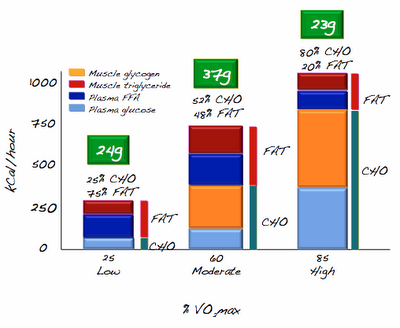
At extremely high intensities, less fat is burned during exercise than lower intensities, but because of the afterburn effect, or Excess Post-Exercise Oxygen Consumption (EPOC), more fat is burned as a result. Very little afterburn takes place following low-intensity exercise.
Bottom Line
If your goal is to lose body fat, higher-intensity exercise yields the same results as lower-intensity exercise, but in a shorter period of time. In order to keep progressing, you should switch up the mode and/or intensity of aerobic training every two to three weeks.
- Low-intensity cardiovascular exercise (40-50% VO2max) burns fewer total calories but a higher percentage of fat calories than high-intensity exercise performed for the same amount of time
- High-intensity cardiovascular exercise (60-80% VO2max) burns more total calories in less time and a smaller percenmtage of fat calories than low-intensity exercise
- With the goal of body fat loss, higher-intensity exercise yields the same results as lower-intensity exercise, but in a shorter period of time
- Beginning exercisers should begin at approximately 50-60% of their maximum heart rate
- Once you adapt to an exercise intensity level, it is beneficial to increase your workout intensity. Changing the intensity and/or duration of your aerobic workout every two weeks to helps you avoid plateaus.
- A coach or trainer can work with you to design an aerobic routine that incorporates interval training to improve stamina, intensity, and ability to burn fat.
At extremely high intensities, less fat is burned during exercise than lower intensities, but because of the afterburn effect, or Excess Post-Exercise Oxygen Consumption (EPOC), more fat is burned as a result. Very little afterburn takes place following low-intensity exercise.
Bottom Line
If your goal is to lose body fat, higher-intensity exercise yields the same results as lower-intensity exercise, but in a shorter period of time. In order to keep progressing, you should switch up the mode and/or intensity of aerobic training every two to three weeks.
Friday, May 25, 2018
Putting Probiotics to the Test
Researchers from my alma mater, Boston University, recently looked into just this question. After purchasing several drugstore probiotics, they cracked open the pills, diluted the bacterial powder stuffed inside, and dabbed the mix onto petri dishes to see what would grow. "The numbers from our methods have been a little lower than what's claimed on the box, but there are definitely living bacteria in there."


“A healthy collection of gut bacteria is not one type of bacteria. It’s many types of bacteria, so there could be potential health benefits of having more variety."
Ultimately, the hope is that the research will help doctors and consumers make more informed choices about over-the-counter and food-based probiotics. And while you should always talk to your doctor before starting a new supplement, especially if you’re seriously ill or have a weakened immune system, it typically can’t hurt to give probiotics a try. I would recommend the natural probiotics found in yogurt, kombucha, or apple cider vinegar, but the capsule variety are also good.
Full Article
Wednesday, May 16, 2018
How to Practice Intuitive Eating
The correlation between obesity and chronic disease is well established. For decades, efforts to fight chronic disease have focused primarily on obesity--encouraging dieting as the best way to lose weight. Despite a thriving weight loss industry, we haven't seen significant improvements in rates of chronic disease.
Weight-cycling, losing weight and later regaining it, is often see with many diets. Eating less that the body needs triggers endocrine system changes that promote weight regain, reducing satiety after eating and increasing hunger. In addition, dieters develop a lower resting energy expenditure.
An emerging paradigm in health promotion is putting more of a focus on weight neutrality. People who are classified as obese can improve their metabolic fitness and reduce their risk of chronic disease by eating more nutritious meals and increasing physical activity--independent of changes in weight. Research on this weight neutral approach to chronic-disease management actually shows substantially higher overall weight loss retention than dieting.
Intuitive eating encourages internal regulation of the eating experience. Try to apply these key concepts to encourage more mindfulness and enjoyment of your eating experience
Restore Body Trust
Dieting enforces strict rules based on external cues. In contrast, intuitive eating restores a sense of body trust. Respecting your internal hunger cues and fullness cues is key to intuitive eating. While diets say wait for the next planned mealtime, intuitive eating says show yourself compassion by feeding yourself when it feels physically necessary.
Make Peace with Food
Rather than labeling high-calorie, low-nutrition foods as "bad," intuitive eating encourages a neutral perspective on the moral value of foods. Letting go of self- and diet-imposed judgments of foods can help heal our relationships with food.
Address Emotional Eating
We often get temporary emotional relief from eating, followed by a realization that our problem remains. Intuitive eating encourages us to show ourselves compassion by entertaining a solution that is unrelated to food and that directly addresses our emotional challenges.
Full Article
Weight-cycling, losing weight and later regaining it, is often see with many diets. Eating less that the body needs triggers endocrine system changes that promote weight regain, reducing satiety after eating and increasing hunger. In addition, dieters develop a lower resting energy expenditure.
An emerging paradigm in health promotion is putting more of a focus on weight neutrality. People who are classified as obese can improve their metabolic fitness and reduce their risk of chronic disease by eating more nutritious meals and increasing physical activity--independent of changes in weight. Research on this weight neutral approach to chronic-disease management actually shows substantially higher overall weight loss retention than dieting.
Intuitive eating encourages internal regulation of the eating experience. Try to apply these key concepts to encourage more mindfulness and enjoyment of your eating experience
Restore Body Trust
Dieting enforces strict rules based on external cues. In contrast, intuitive eating restores a sense of body trust. Respecting your internal hunger cues and fullness cues is key to intuitive eating. While diets say wait for the next planned mealtime, intuitive eating says show yourself compassion by feeding yourself when it feels physically necessary.
Make Peace with Food
Rather than labeling high-calorie, low-nutrition foods as "bad," intuitive eating encourages a neutral perspective on the moral value of foods. Letting go of self- and diet-imposed judgments of foods can help heal our relationships with food.
Address Emotional Eating
We often get temporary emotional relief from eating, followed by a realization that our problem remains. Intuitive eating encourages us to show ourselves compassion by entertaining a solution that is unrelated to food and that directly addresses our emotional challenges.
Full Article
Subscribe to:
Posts (Atom)


 Posts
Posts

